
SpaceX | Starship | Flight 12 Rocket Launch
12th test flight of the two-stage Starship launch vehicle. Maiden Flight of Starship V3
Arianespace | Ariane 64 | Amazon Leo (LE-02) Rocket Launch
Amazon Leo, formerly known as Project Kuiper, is a mega constellation of satellites in Low Earth Orbit that will offer broadband internet access, this constellation will be managed by Kuiper Systems LLC, a subsidiary of Amazon. This constellation is planned to be composed of 3,276 satellites. The satellites are projected to be placed in 98 orbital planes in three orbital layers, one at 590 km, 610 km and 630 km altitude.
35-40 satellites will be carried on each Ariane 6 launch.
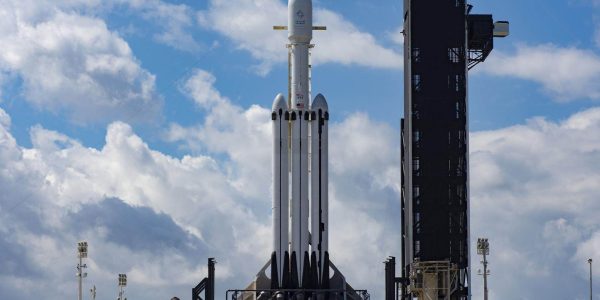
SpaceX | Falcon Heavy | ViaSat-3 F3 (ViaSat-3 Asia-Pacific) Rocket Launch
The ViaSat-3 is a series of three Ka-band satellites is expected to provide vastly superior capabilities in terms of service speed and flexibility for a satellite platform. Each ViaSat-3 class satellite is expected to deliver more than 1-Terabit per second of network capacity, and to leverage high levels of flexibility to dynamically direct capacity to where customers are located.
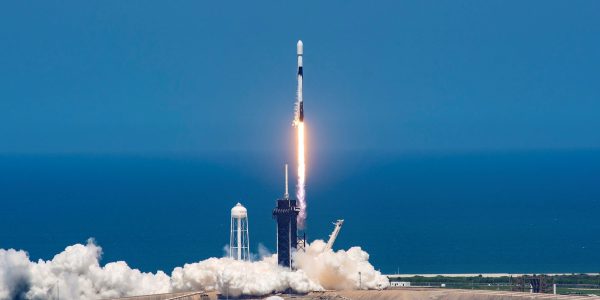
SpaceX | Falcon 9 Block 5 | GPS III SV10 Rocket Launch
Tenth of ten GPS III missions.
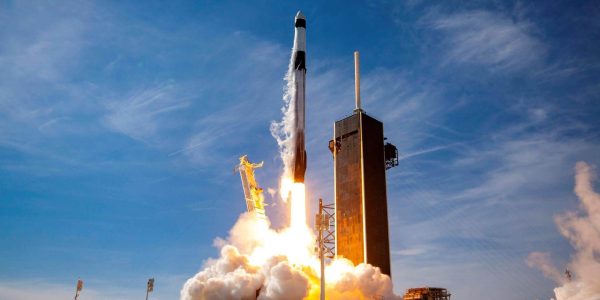
SpaceX | Falcon 9 Block 5 | Dragon CRS-2 SpX-34 Rocket Launch
34th commercial resupply services mission to the International Space Station operated by SpaceX. The flight will be conducted under the second Commercial Resupply Services contract with NASA.
Cargo Dragon 2 brings supplies and payloads, including critical materials to directly support science and research investigations that occur onboard the orbiting laboratory.

Arianespace | Ariane 64 Block 2 | Amazon Leo (LE-03) Rocket Launch
Amazon Leo, formerly known as Project Kuiper, is a mega constellation of satellites in Low Earth Orbit that will offer broadband internet access, this constellation will be managed by Kuiper Systems LLC, a subsidiary of Amazon. This constellation is planned to be composed of 3,276 satellites. The satellites are projected to be placed in 98 orbital planes in three orbital layers, one at 590 km, 610 km and 630 km altitude.
35-40 satellites will be carried on each Ariane 6 launch.
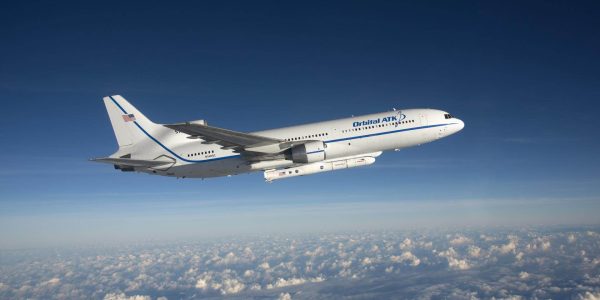
Northrop Grumman Space Systems | Pegasus XL | Swift Rescue Mission Rocket Launch
Contracted by NASA under the Small Business Innovation Research Phase 3 contract, Katalyst Space Technologies’ LINK servicing spacecraft will rendezvous and attach to NASA’s Neil Gehrels Swift Observatory to re-boost its orbit. This aims to demonstrate a key capability for the future of space exploration and extending the Swift mission’s science lifetime in gamma ray astronomy.
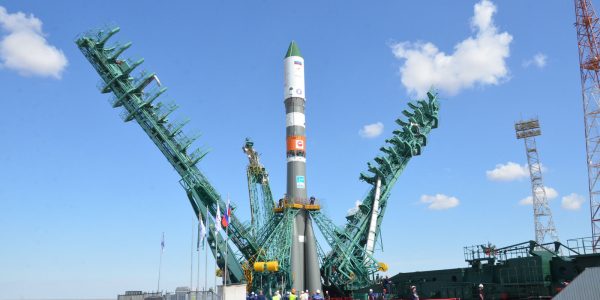
Russian Federal Space Agency (ROSCOSMOS) | Soyuz 2.1a | Progress MS-35 (96P) Rocket Launch
Progress resupply mission to the International Space Station.
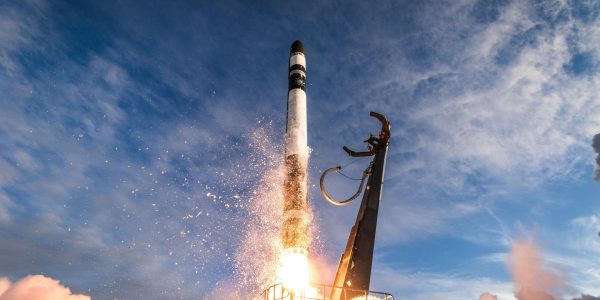
Rocket Lab | Electron | LOXSAT 1 Rocket Launch
LOXSAT 1 is a demonstration satellite of a complete cryogenic oxygen fluid management system in orbit, developed by Eta Space and sponsored by NASA’s Tipping Point program.
The system will be integrated on a Rocket Lab Photon-LEO satellite bus and collect critical cryogenic fluid management data in orbit for 9 months, demonstrating capabilities of in-space cryogenic storage and transferal. Eta Space plans to use technology developed for this mission to develop a truly commercial depot intended to serve multiple customers in the future.